Client: Financial Company A (financial company)
Project Period: 2012, 1 month
Project Background and Topic
In line with its information security implementation plan, Financial Company A carried out projects to deploy several security solutions, including a DB access control solution. Under the financial supervisory regulations, every security solution that is introduced must have obtained CC certification. One of the solutions introduced, the DB access control solution, was subject to extensive customization requirements from Company A.
The customization requirements for the DB access control solution made development necessary across many areas, including the solution architecture, and it became necessary to assess and verify security soundness as a result. Security products are also based on software developed by people, so security gaps exist.
In particular, customization that changes even the existing architecture can create a variety of unexpected security problems, so the client requested a vulnerability assessment of the security solution. Because it was not suitable in a situation of this kind, the work proceeded by assessing vulnerabilities based on an analysis of security threat scenarios.
Key Work Performed
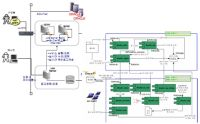
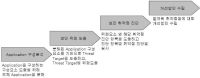
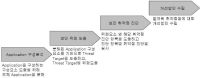
The high-level architecture of the DB access control solution consists of an Agent installed on the user PC and a Proxy Gateway installed in front of the DBMS. The Proxy Gateway server hosts modules such as a user authentication module, a security policy module, and an access-log management module, and it provides functions such as user access control, privilege management, and access-log management. Under the client’s customization requirements, the PC agent was not changed, but the Proxy Gateway was split into two different physical servers, a Gateway Server and a Log Server, and substantial additional development became necessary. The solution’s TO-BE architecture was analyzed, threat targets were defined, and the threats that could occur for each target were analyzed using Microsoft’s STRIDE analysis technique. Based on the scenarios derived from the threat analysis, vulnerability check items were developed to assess exposure to the possible threats, and a methodology of assessing the vulnerabilities for each check item was applied.
Because the solution is not complex, five threat targets were derived, including the PC Agent, and eleven threats were derived in total. Vulnerability check items were developed for the eleven threat scenarios and the vulnerabilities were assessed. The findings included Buffer overflow, Input validation, the absence of a watchdog mechanism in the access-control policy module for responding to failures, and insufficient integrity protection for log data. The solution vendor planned a development schedule to remediate the discovered vulnerabilities together with the client’s customization requirements, and proceeded with development.
The overall procedure was as follows.
Project CSF
- It is important to accurately understand the physical and logical architecture and the Process Diagram of the target system
- An existing checklist-based vulnerability assessment technique has limits in achieving the objective, so an approach from the perspective of threat-analysis techniques is important
- It is important to select a technique that is authoritative and proven, rather than threat analysis that relies only on individual experience, so that no security threat is omitted
Key Activities and Deliverables
| Phase | Key Work Performed | Deliverables |
|---|---|---|
| Architecture Analysis | – AS-IS and TO-BE architecture analysis Analysis of the physical and logical architecture and the Process Diagram | – |
| Threat Analysis | – Threat-target analysis – Derivation of STRIDE-based threat scenarios for each threat target – Development of vulnerability assessment items for each threat scenario – Performance of the vulnerability assessment for each threat scenario | – |
| Assessment Results Analysis | – Analysis of the vulnerability assessment results for each threat scenario and calculation of weights – Derivation of an improvement for each vulnerability found – Sharing of the assessment results and improvements with the developers | – OO Security Solution Vulnerability Assessment Results Report |
- Sample deliverables: TO-BE architecture analysis results